

I have been an architect since 2005. I worked for SOM in Brussels, London and Chicago, then opened my own office in New York, Studio P Architects. Today I read every application we receive myself. And here is something most students never hear: I always start with the email, not the portfolio. If the email is badly written, I do not even open the attachment.
That sounds harsh. It is not personal. In a small office, everyone ends up writing to clients and contractors. An email is your first piece of work, and it is the one I read first.
Just so you know, some of the links below are affiliate links. If you decide to buy through them, it won’t cost you anything extra, but it helps me keep OpenBook free. As an Amazon Associate, I earn from qualifying purchases.
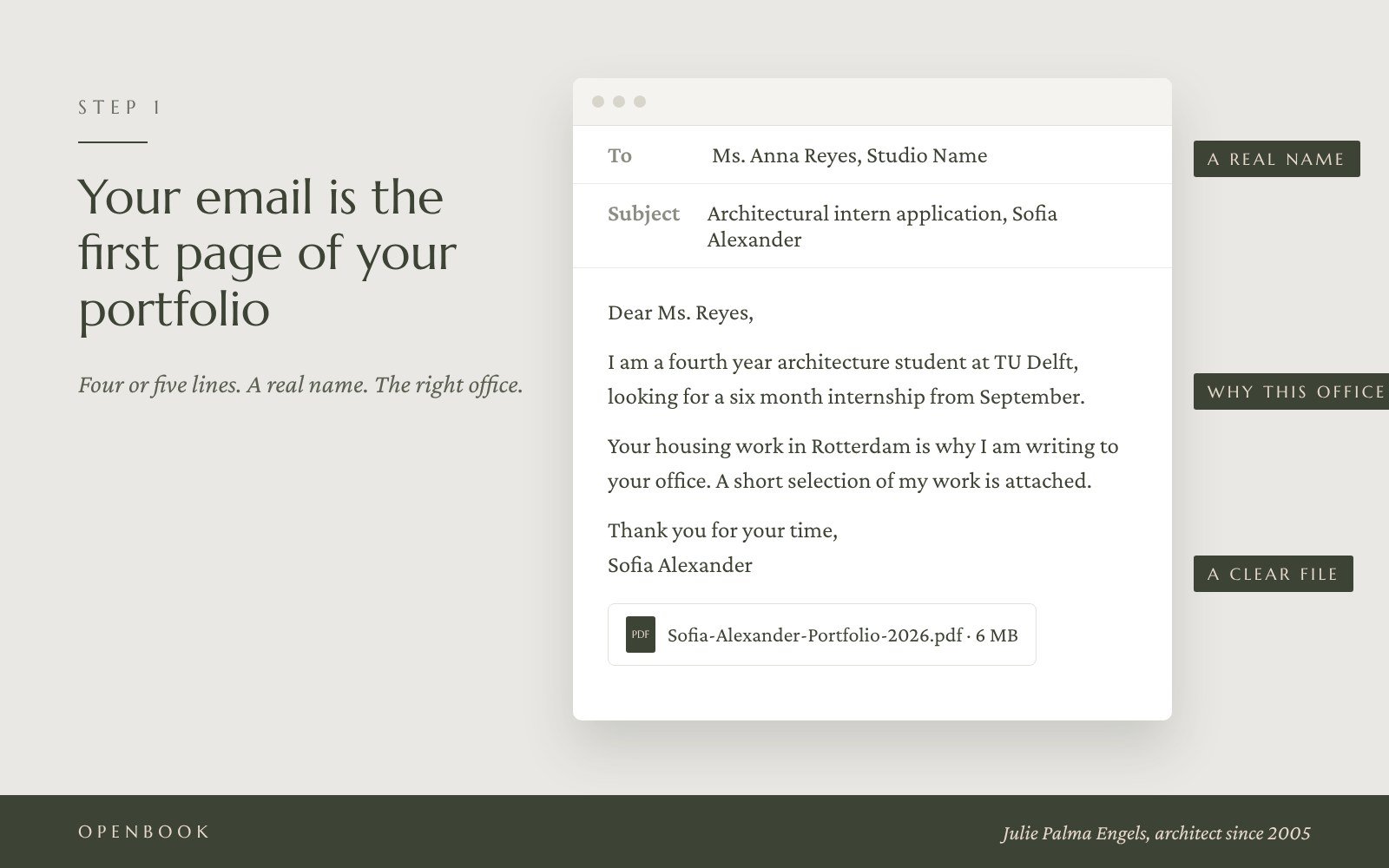
1. Your email is the first page of your portfolio
Keep it short: who you are, what you are looking for, why this office, and when you are available. Four or five lines are enough. Write to a person, not to "Dear Sir or Madam", and check the name of the office twice. A cover letter addressed to another firm, sent to me, goes straight to the no pile.
I am dyslexic, so believe me, I know how easily spelling mistakes slip in. But with today's spell checkers, a mistake simply means you did not check.
2. The file says something about you before it opens
A 60 MB attachment called portfolio_final_v3_NEW already tells me something. Name your file clearly, for example Firstname-Lastname-Portfolio-2026.pdf, and keep it under 10 MB unless the office asks otherwise. A link to an online version is a nice extra, but if they ask for a PDF, send the PDF.
3. Send a sample, not everything
Most decisions are made before page 10. For a first email, a short selection of your best work does more than 60 pages. Put your strongest project first: if the first project is weak, many readers stop there. You can always send the full portfolio when they ask for a meeting.
If you want to go further on layout, Portfolio Design by Harold Linton is the book I recommend to students. It is still the reference on architecture portfolios, and it costs less than a lunch out.
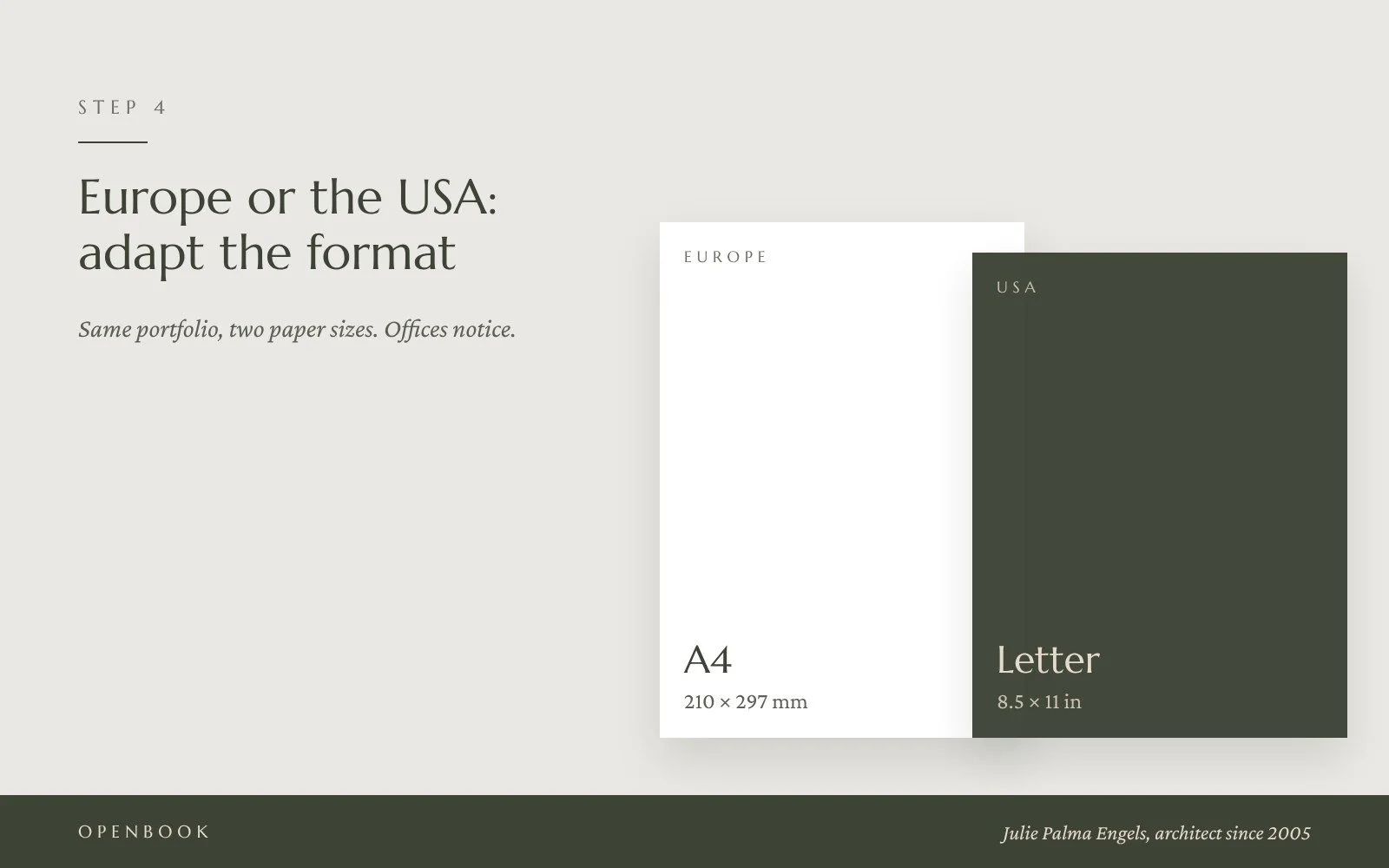
4. Europe or the USA: adapt the format
When I moved from Europe to the US, the first shock was not the architecture, it was the units. If you apply in the US, set your portfolio and resume in Letter size, not A4. If you apply in Europe from abroad, do the opposite. It is a small detail, but it shows the office you have already thought about working with them.
5. Check everything one last time
Before you press send, open the PDF on your phone. In a small studio, the principal often reads applications between two meetings, on a phone. Are the images sharp? Can you read the plans? Are your name and email on the first and last page?
I also check every PDF on a tablet like the iPad Air, because that is how many principals read at home in the evening. And if your laptop struggles with big PDFs and Canva, here is my guide to the best laptops for architecture students.

Templates to help you
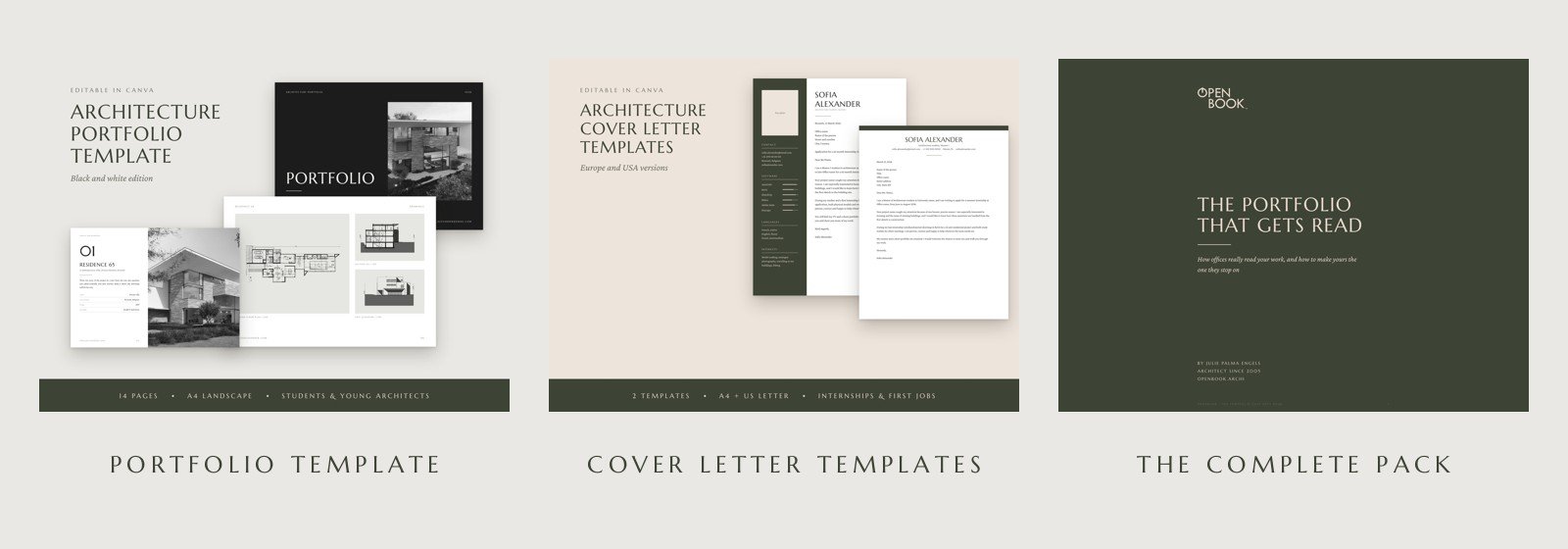
If you want a head start, my free portfolio template for Canva is a good place to begin. For applications, the cover letter templates for Europe and the USA follow exactly the advice above, and the complete pack includes my portfolio guide and the portfolio template, now in two editions, black and white or light.
Everything else I use and recommend, from drawing pens to laptops, is on my Amazon storefront.
Stuck on your application? Post it in the OpenBook community on Facebook: the community is there to help each other, and so am I.
Julie Palma Engels has been an architect since 2005. She worked for SOM in Brussels, London and Chicago, then opened her own office, Studio P Architects, in New York. Through OpenBook, she shares what architecture school doesn’t teach you.